

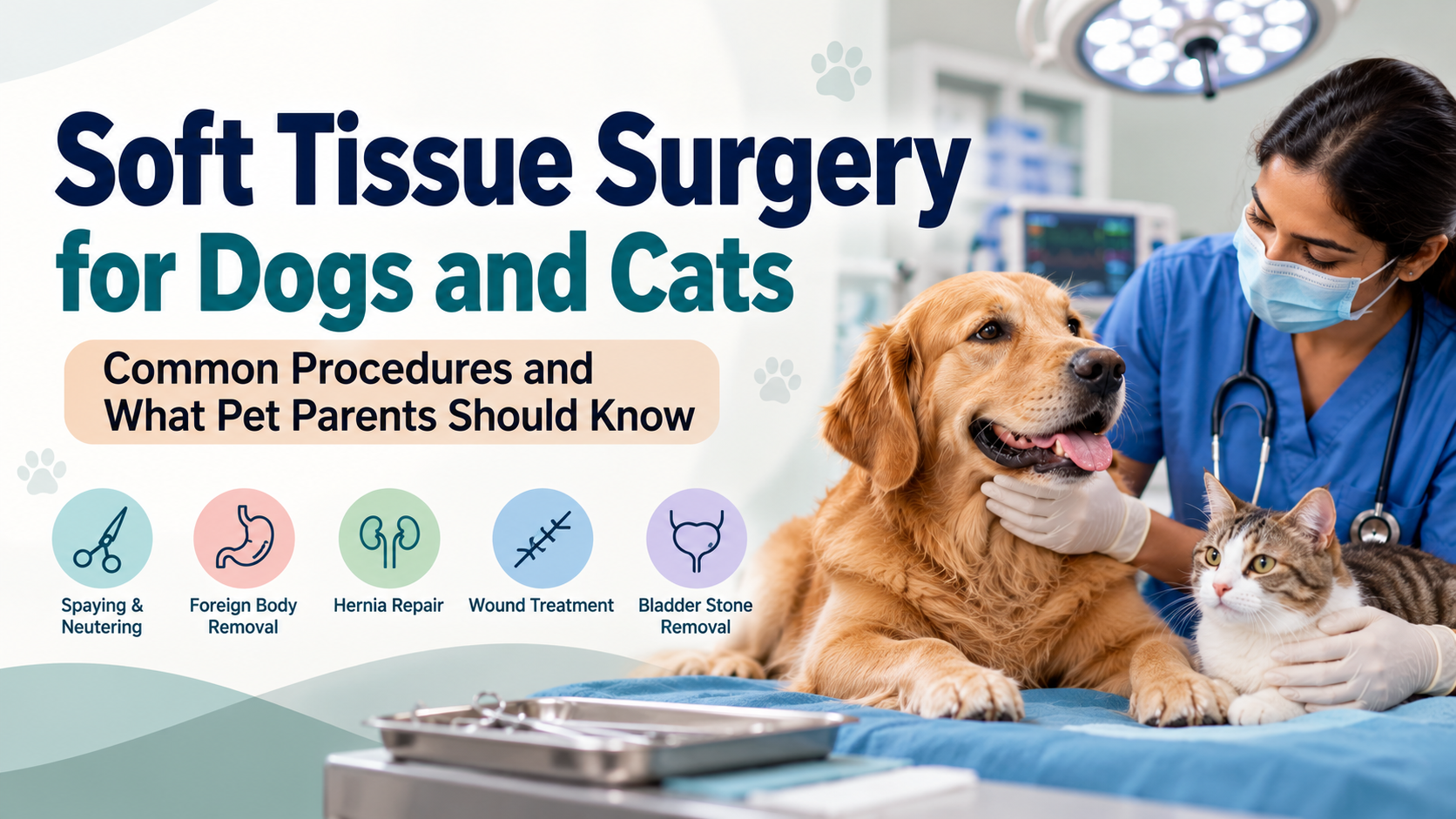


When a pet is diagnosed with a condition that requires surgery, it can be worrying for any pet parent. Understanding the procedure, its purpose and the recovery process can help you make informed decisions about your pet's health.
Soft tissue surgery is a common area of veterinary medicine that involves treating conditions affecting the skin, internal organs, reproductive system and other non-bony structures. These procedures may be planned in advance or performed urgently, depending on the pet's condition.
Soft tissue surgery refers to surgical procedures involving structures other than bones and joints. It may be recommended to treat injuries, remove abnormal growths, address internal organ problems or manage certain reproductive conditions.
Veterinarians assess each pet individually before recommending surgery. The type of procedure depends on the diagnosis, the pet's overall health and the expected benefits and risks.
Spaying and neutering are common veterinary surgical procedures involving the reproductive organs.
Spaying typically involves removing the ovaries, sometimes along with the uterus, in female pets. Neutering generally involves removing the testicles in male pets.
These procedures prevent reproduction and can reduce the risk of certain reproductive health conditions. Your veterinarian can advise on the appropriate timing based on your pet's age, breed and health.
Dogs and cats may accidentally swallow toys, fabric, bones or other objects that cannot pass safely through their digestive system.
When an object causes an obstruction, surgery may be required to remove it.
Symptoms may include repeated vomiting, abdominal discomfort, loss of appetite and unusual tiredness. Suspected intestinal obstruction requires urgent veterinary assessment.
A hernia occurs when tissue or an organ protrudes through a weakness or opening in the surrounding muscle or body wall.
Some hernias may be present from birth, while others can develop following injury or other health conditions.
Surgical repair may be recommended depending on the type, location and severity of the hernia.
Deep cuts, bite wounds and other injuries sometimes require surgical cleaning, removal of damaged tissue and suturing.
The veterinarian will assess the wound before deciding on the appropriate treatment.
Prompt medical attention can help reduce complications and support healing.
Bladder stones are mineral deposits that develop within the urinary bladder.
Some stones can be managed through dietary or medical treatment, depending on their composition and the pet's condition. Others may require surgical removal.
Difficulty urinating, blood in the urine or frequent attempts to urinate may indicate a urinary problem. A pet that cannot pass urine needs emergency veterinary attention.
An abscess is a collection of pus that may develop following a bite wound, injury or infection.
Some abscesses require drainage and cleaning under veterinary supervision.
The veterinarian may also prescribe medication and recommend follow-up care based on the severity of the infection.
Dogs and cats can develop lumps or abnormal growths on or beneath their skin.
Not every lump is cancerous, and not every growth requires surgery. However, veterinary examination and appropriate diagnostic testing are important.
If surgical removal is recommended, the veterinarian may discuss laboratory examination of the removed tissue to help establish a diagnosis.
Before surgery, the veterinarian evaluates the pet's overall condition to identify potential risks and determine the appropriate surgical plan.
Pre-surgical assessment may include:
A complete physical examination
Review of medical history and current medications
Blood tests when required
Assessment of anaesthetic risks
Planning for pain management and recovery
Pet parents may also receive instructions about feeding, medication and arrival time before the procedure. Follow the veterinarian's specific fasting instructions rather than withholding food or water without guidance.
Most major soft tissue procedures require general anaesthesia, allowing the veterinary team to perform the operation while the pet remains unconscious and does not experience surgical pain.
The surgical team follows appropriate hygiene and sterile techniques to reduce infection risks.
During anaesthesia, relevant vital signs are monitored, and the veterinary team adjusts care according to the pet's condition.
The duration of surgery depends on the procedure and its complexity.
Recovery varies depending on the type of operation, the pet's age and overall health.
Some pets can return home after appropriate post-operative observation, while others may require hospitalisation for continued treatment and monitoring.
Common recovery instructions may include:
Giving prescribed medication as directed
Limiting running, jumping and strenuous activity
Preventing licking or scratching of the surgical wound
Keeping the incision clean and dry
Following feeding and hydration instructions
Attending scheduled follow-up appointments
Contact the veterinarian if your pet develops persistent vomiting, worsening swelling, wound discharge, unusual weakness or other concerning symptoms after surgery.
There is no single recovery period for every soft tissue procedure.
For many uncomplicated surgeries, initial skin-incision healing may take approximately 10–14 days, while deeper tissues or more complex operations may require longer.
Your veterinarian will advise when your pet can safely resume normal activities.
When a pet requires surgical treatment, appropriate veterinary assessment, anaesthetic planning and post-operative monitoring are important parts of care.
Eden Pets Care provides soft tissue surgery for pets in Nerkundram, Chennai, including procedures such as spaying, neutering, foreign body removal, hernia repair, wound suturing, bladder stone removal and other soft tissue treatments.
The clinic also provides pre-surgical evaluation, pain management, post-operative observation and follow-up guidance based on each pet's medical needs.
Soft tissue surgery can play an important role in treating various health conditions affecting dogs and cats. Although the thought of surgery may be concerning, understanding the procedure and following veterinary recommendations can help pet parents prepare for their pet's treatment and recovery.
If your pet has been diagnosed with a condition that may require surgery, consult a veterinarian to understand the available treatment options and the most appropriate course of care.
Eden Pets Care supports pet parents in Nerkundram and nearby areas of Chennai with veterinary surgical consultations, soft tissue procedures and post-operative care.
Appointment in Chennai


Youtube