

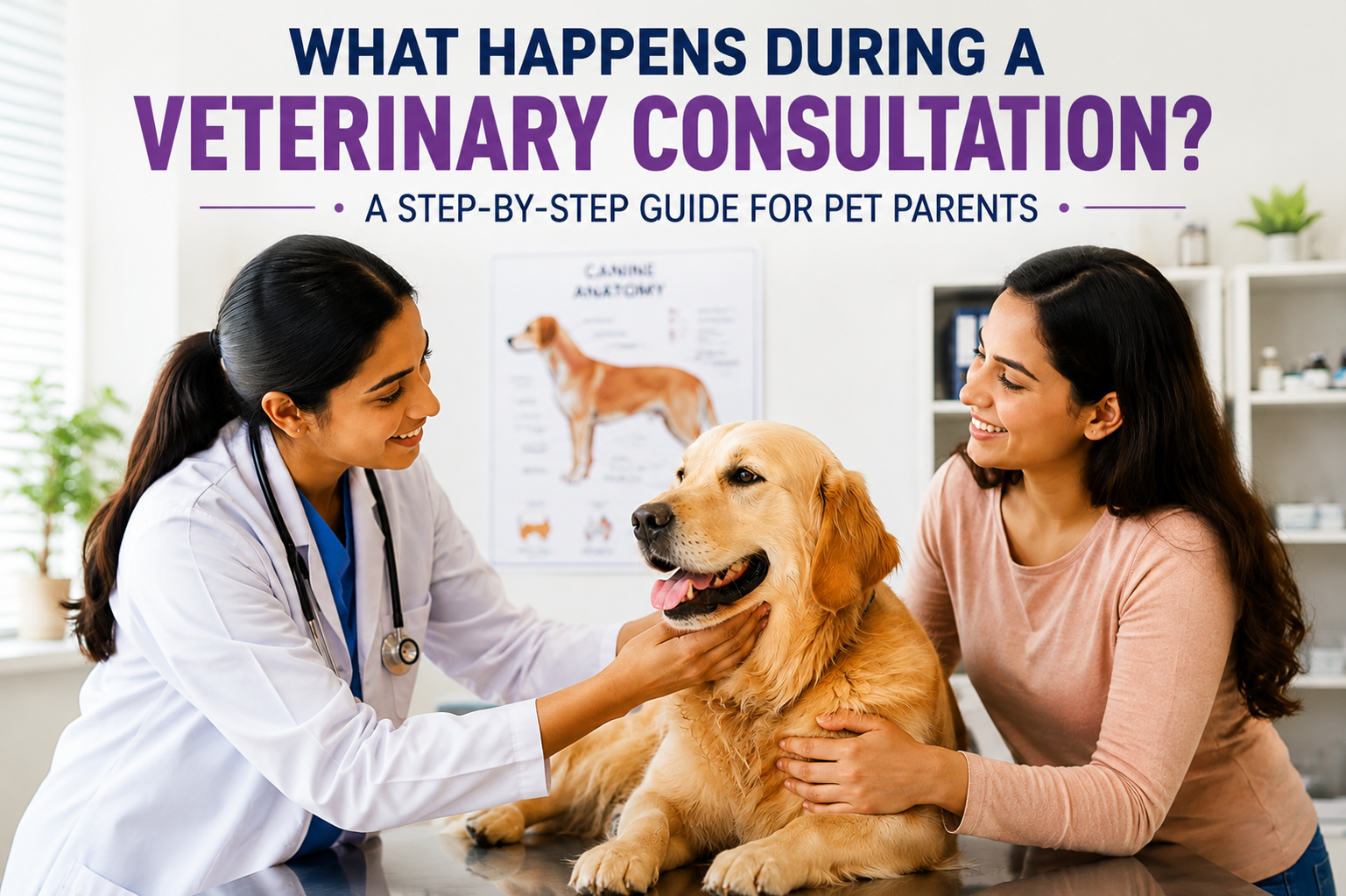


Taking your pet to a veterinarian for the first time, or visiting a new veterinary clinic, can leave many pet parents wondering what to expect. A veterinary consultation is more than simply describing your pet’s symptoms. It gives the veterinarian an opportunity to understand your pet’s health, examine them and recommend the right course of care.
Knowing what happens during a consultation can make the experience more comfortable for both you and your pet.
The consultation usually begins with a conversation between you and the veterinarian. You may be asked about your pet’s current symptoms, eating habits, activity levels, behaviour and general health.
The veterinarian may also ask about:
Providing accurate information can help the veterinarian understand your pet’s condition more clearly.
After discussing your pet’s health history, the veterinarian will perform a physical examination.
Depending on the concern, the examination may include checking your pet’s:
A physical examination helps the veterinarian identify signs that may not always be obvious at home.
Once the examination is completed, the veterinarian will discuss the findings with you. Some conditions may be identified based on the history and physical examination, while others may require additional investigation.
Your veterinarian may explain the possible causes of the symptoms and discuss what needs to be done next.
This is also a good time to ask questions about your pet’s condition, treatment options and expected recovery.
Not every veterinary consultation requires diagnostic testing. However, if the veterinarian needs more information, they may recommend suitable tests.
Depending on the symptoms, these could include laboratory tests or other diagnostic procedures.
The veterinarian will explain why a particular test is recommended and how the results can help with diagnosis and treatment.
After assessing your pet, the veterinarian may recommend a treatment plan based on their condition.
This may include:
Make sure you understand the instructions before leaving the clinic. If medication has been prescribed, ask about the dosage, timing and duration if anything is unclear.
Your pet’s recovery often continues at home. The veterinarian may provide specific instructions to help your pet recover comfortably.
You may receive guidance about feeding, medication, exercise, hygiene, wound care or monitoring your pet’s symptoms.
It is important to follow the recommended instructions and observe your pet for any changes after the consultation.
Some health concerns may require more than one visit. The veterinarian may recommend a follow-up consultation to monitor your pet’s progress or review test results.
Follow-up care can be particularly important when your pet is recovering from an illness, injury or ongoing health problem.
If your pet’s symptoms become worse or new symptoms appear, contact your veterinarian rather than waiting for the scheduled follow-up.
A little preparation can make the consultation easier. Before visiting the clinic, note down any important changes you have noticed in your pet.
You can also keep the following information ready:
If your pet has experienced an unusual symptom, photos or videos taken at home may also help the veterinarian understand what happened.
Do not hesitate to ask questions during the consultation. Understanding your pet’s condition and treatment can help you provide better care at home.
You can ask:
Clear communication between the pet parent and veterinarian is an important part of good veterinary care.
If your pet is showing health concerns or requires professional assessment, a veterinary consultation can help identify the appropriate next steps.
Eden Pets Care provides veterinary consultation in Nerkundram for dogs, cats, birds and small mammals. The OPD consultation includes discussion of your pet’s health history, physical examination, diagnostic recommendations when required, treatment planning and follow-up guidance.
The service can help pet parents address concerns such as digestive problems, skin allergies, ear and eye issues, respiratory symptoms, appetite changes, weakness and minor injuries.
A veterinary consultation does not have to be a stressful experience. Preparing your pet, carrying relevant medical information and staying calm can make the visit easier.
Most importantly, do not ignore unusual changes in your pet’s health. A timely veterinary consultation can help you understand the problem and determine what care your pet may need.
For pet parents in Nerkundram and nearby areas, professional veterinary consultation provides an opportunity to discuss concerns directly with a veterinarian and plan appropriate care for your pet.
Appointment in Chennai


Youtube