



November 13, 2026
A sudden illness, accident or unexpected change in your pet's health can be frightening. Whether your dog is struggling to breathe, your cat has suffered an injury or your pet suddenly becomes unresponsive, knowing what to expect at an emergency veterinary clinic can help you respond more confidently.
Emergency veterinary care focuses on assessing urgent medical conditions, stabilising pets and providing appropriate treatment based on the severity of their condition.
Understanding the emergency treatment process can help pet parents prepare for what happens after arriving at a veterinary clinic and why certain medical decisions may need to be made quickly.
Emergency veterinary care involves the immediate assessment and treatment of pets experiencing serious illnesses, injuries or potentially life-threatening conditions.
Unlike a routine veterinary consultation, emergency treatment prioritises urgent health concerns that may require rapid medical intervention.
Veterinarians assess the pet's condition and determine the necessary treatment based on factors such as breathing, circulation, consciousness, injuries and overall stability.
The treatment process may involve emergency stabilisation, diagnostic testing, medication, oxygen support, fluid therapy or hospitalisation, depending on the pet's medical needs.
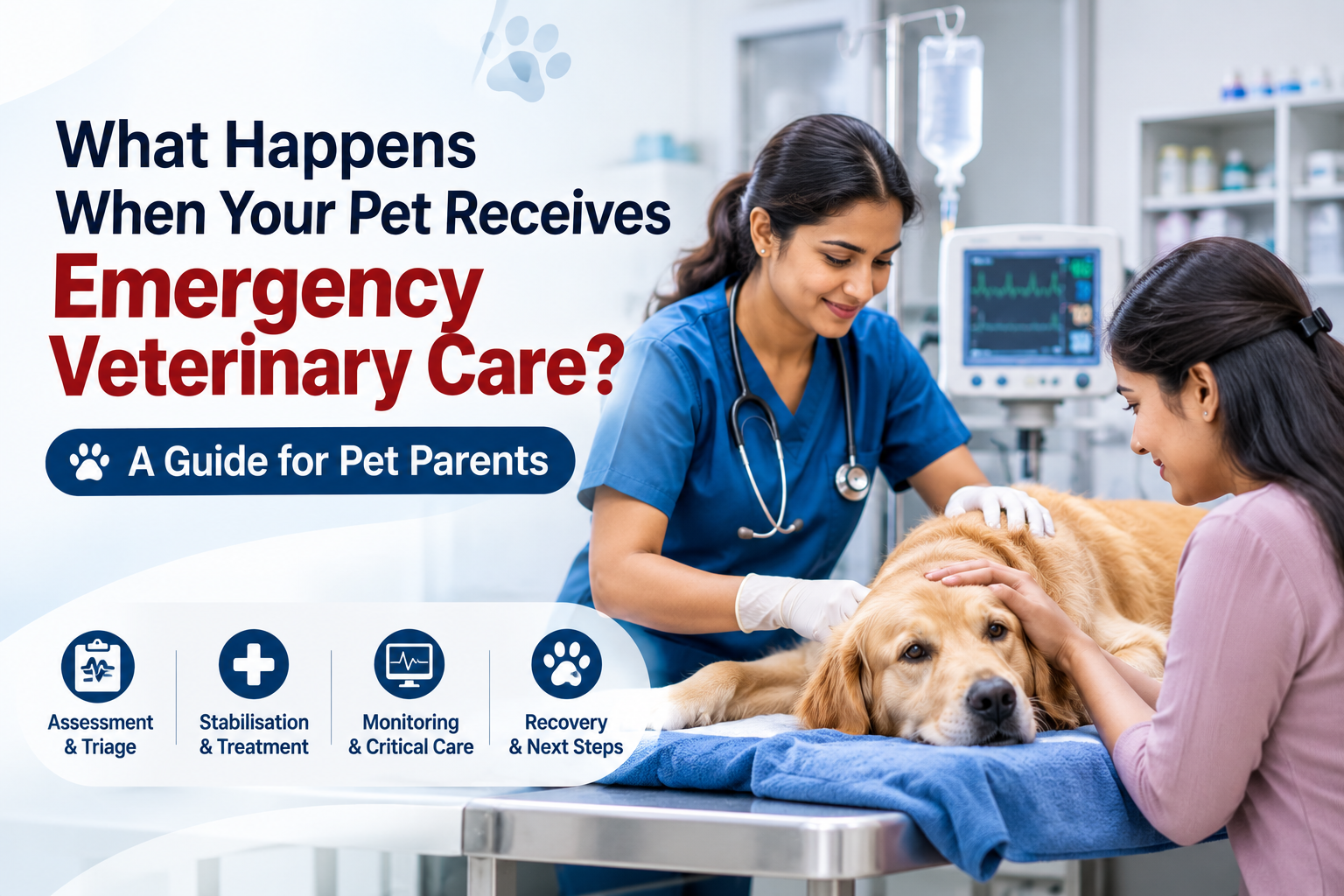
When a pet arrives at an emergency veterinary clinic, the veterinary team first assesses the urgency of the situation.
This process is called triage.
Triage helps veterinary professionals identify pets requiring immediate attention and prioritise treatment based on the severity of their condition.
During the initial assessment, the veterinarian may evaluate:
Breathing patterns and respiratory effort
Heart rate and circulation
Level of consciousness
Body temperature
Signs of severe pain
Visible injuries or bleeding
Signs of shock or dehydration
Pets experiencing life-threatening symptoms may require immediate treatment before a detailed medical history can be collected.
Once the initial assessment is completed, the veterinary team focuses on stabilising the pet if necessary.
Stabilisation involves addressing immediate health risks before proceeding with additional diagnostic tests or treatment.
Depending on the condition, emergency stabilisation may include:
Oxygen support for breathing difficulties
Intravenous fluids when medically appropriate
Measures to control significant bleeding
Medication to manage seizures or other urgent symptoms
Pain management
Support for abnormal body temperature
Monitoring of vital signs
The veterinarian determines which interventions are appropriate based on the pet's clinical condition.
For critically ill pets, stabilisation may continue while diagnostic testing and further treatment are arranged.
Once immediate concerns are addressed, the veterinarian may ask the pet parent questions to better understand what happened.
Information about the onset of symptoms and any recent incidents can help guide the assessment.
Pet parents may be asked:
When did the symptoms begin?
Has the pet experienced similar symptoms before?
Has the pet been involved in an accident?
Could the pet have swallowed a foreign object?
Has the pet been exposed to medication, chemicals or potentially toxic substances?
Is the pet currently receiving medication?
Does the pet have any existing medical conditions?
Providing accurate information can help the veterinarian identify possible causes and determine the next steps.
If poisoning is suspected, bringing the product packaging or a photograph of its label may be useful, provided doing so does not delay emergency care.
After the pet's immediate medical needs are addressed, the veterinarian may recommend diagnostic tests to investigate the underlying problem.
Not every emergency requires the same tests. The choice depends on the symptoms, physical examination findings and the pet's stability.
Common diagnostic procedures may include:
Blood tests may help evaluate organ function, blood cell counts, electrolyte levels and other indicators relevant to the pet's condition.
X-rays may be recommended to investigate suspected fractures, certain foreign objects, chest abnormalities or other internal concerns.
Ultrasound imaging can help veterinarians assess certain internal organs and investigate problems such as abdominal fluid accumulation.
Depending on the emergency, the veterinary team may monitor blood pressure, oxygen saturation, heart rhythm or other clinical measurements.
These assessments help guide treatment decisions and monitor the pet's response to care.
Once the veterinarian has gathered sufficient information, an appropriate treatment plan can be developed.
Emergency treatment varies considerably depending on the underlying condition.
For example:
Accidental injuries: Pets may require wound management, pain relief, diagnostic imaging or surgical evaluation.
Breathing difficulties: Treatment may involve oxygen support, monitoring and investigation of the underlying respiratory or cardiac problem.
Severe vomiting or diarrhoea: The veterinarian may assess hydration, electrolyte disturbances and possible causes before recommending treatment.
Seizures: Emergency medication and further assessment may be required to control seizures and investigate their cause.
Suspected poisoning: Treatment depends on the substance involved, the amount of exposure and the time since exposure.
Some conditions may require emergency surgery or referral for specialised treatment.
The veterinarian will explain the recommended approach based on the pet's medical needs and the resources available.
Some pets improve after initial treatment and may be able to return home with medication and follow-up instructions.
Others require continued observation because their condition remains unstable or could change.
Critical care monitoring may involve regular assessment of:
Heart rate and breathing
Blood pressure
Oxygen levels
Hydration status
Body temperature
Pain and comfort
Response to medication
Overall clinical condition
Close monitoring helps veterinary professionals identify changes and adjust treatment when necessary.
Pet parents seeking emergency veterinary care in Nerkundram can consult Eden Pets Care for assessment and management of urgent health concerns in pets.
The need for emergency treatment, ongoing monitoring or referral depends on the pet's condition and the veterinarian's assessment.
Not every pet receiving emergency treatment needs to remain at the veterinary clinic.
However, hospitalisation may be recommended when a pet requires continued medication, IV fluids, oxygen support, repeated assessment or close observation.
The veterinarian considers several factors before recommending hospitalisation, including:
Severity of the illness or injury
Stability after initial treatment
Need for ongoing medical intervention
Ability to eat and drink
Response to prescribed medication
Safety of continuing recovery at home
Hospitalisation allows the veterinary team to continue treatment and observe the pet's progress.
Pet parents can also learn more about in-patient hospitalisation for pets in Nerkundram and how veterinary supervision may support pets requiring ongoing medical care.
When the veterinarian determines that a pet is stable enough to return home, discharge instructions are provided.
These instructions may include:
Medication schedules and dosage
Feeding and hydration recommendations
Rest and activity restrictions
Wound care instructions, if applicable
Symptoms that require immediate reassessment
Follow-up appointment recommendations
Pet parents should follow these instructions carefully and contact the veterinary clinic if the pet's condition worsens.
Recovery time varies depending on the illness, injury and treatment received.
During an emergency, reaching appropriate veterinary care quickly is more important than gathering every document.
However, when readily available, the following information may be helpful:
Previous medical records
Current medication details
Information about existing health conditions
Vaccination records
Recent diagnostic reports
Details of a suspected toxin or swallowed object
If your pet has been injured, handle and transport them carefully. An animal in pain may bite unexpectedly, even if normally friendly.
Avoid giving human medications, inducing vomiting or attempting home treatment unless specifically instructed by a veterinarian.
Certain symptoms require immediate veterinary assessment rather than waiting for a routine appointment.
Seek emergency veterinary attention if your pet experiences:
Severe difficulty breathing
Collapse or loss of consciousness
Seizures lasting several minutes or repeated seizures
Significant or uncontrolled bleeding
Suspected poisoning
Serious injuries following an accident
A swollen abdomen accompanied by repeated unproductive retching
Inability to urinate
Severe weakness or sudden inability to stand
Signs of heatstroke, such as collapse, excessive panting or altered consciousness
These symptoms can indicate potentially life-threatening conditions.
If possible, contact the veterinary facility while travelling so the team can advise on immediate precautions and confirm that appropriate emergency services are available.
Although emergencies cannot always be prevented, preparation can make it easier to respond when something unexpected happens.
Keep your veterinarian's contact information accessible and identify a veterinary emergency facility that can provide care when needed.
It is also helpful to maintain updated medical records, store medications and harmful household substances securely, and use appropriate pet carriers or restraints during travel.
Most importantly, avoid delaying veterinary attention when your pet shows serious or rapidly worsening symptoms.
Emergency situations can develop suddenly, and timely veterinary assessment is important when a pet experiences a serious health concern.
Eden Pets Care provides emergency and critical veterinary care in Nerkundram, Chennai, with services focused on evaluating urgent medical conditions, stabilising pets and determining appropriate treatment.
Depending on the pet's condition, emergency management may involve diagnostic assessment, medication, fluid therapy, oxygen support, monitoring or further medical intervention.
Pet parents in Nerkundram and nearby areas can contact the clinic to discuss urgent veterinary concerns and confirm the availability of appropriate care.
Understanding what happens during emergency veterinary care can help pet parents feel more prepared when their pet requires urgent medical attention.
From initial triage and stabilisation to diagnostic testing, treatment and recovery monitoring, each stage plays an important role in managing a veterinary emergency.
While not every unexpected symptom indicates a life-threatening condition, severe or rapidly worsening symptoms should never be ignored.
Seeking timely veterinary assessment and following professional medical guidance can help ensure that your pet receives appropriate care when it matters most.
Eden Pets Care supports pet parents with veterinary consultation, emergency assessment and critical care services in Nerkundram, Chennai.
Appointment in Chennai


Youtube