

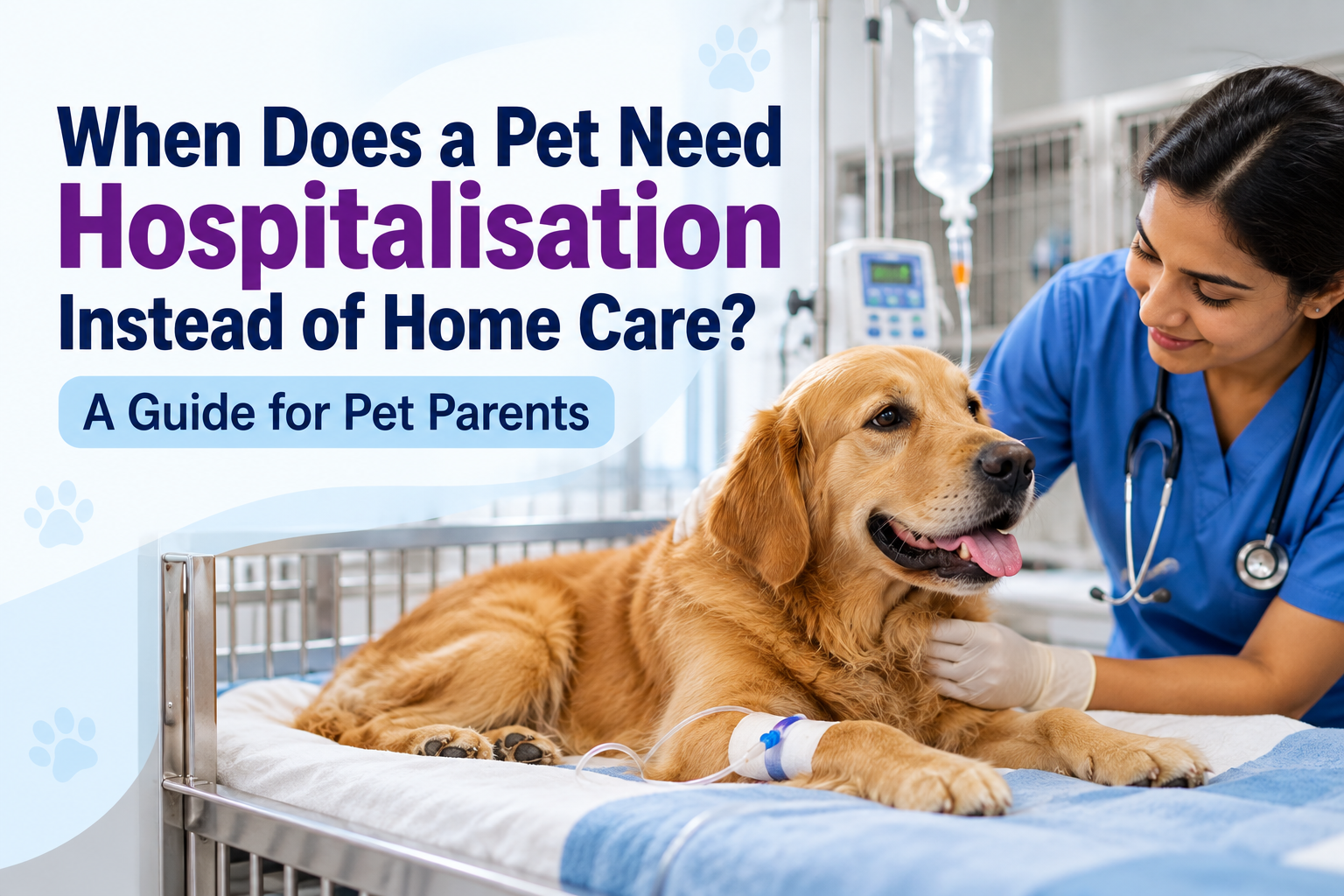


When a pet becomes unwell, many pet parents naturally want to care for them at home where they feel comfortable and familiar. For minor health concerns and stable recovery, home care may sometimes be appropriate when recommended by a veterinarian. However, certain illnesses, injuries and recovery situations require closer medical supervision than can reasonably be provided at home.
Veterinary hospitalisation allows pets to receive regular monitoring, medication and supportive care based on their condition. Understanding why a veterinarian may recommend hospitalisation can help pet parents feel more prepared when making decisions about their pet's care.
Pet hospitalisation means that a dog, cat or other pet stays at a veterinary facility for a period of time to receive medical care and observation.
Unlike a routine veterinary consultation, hospitalisation is generally recommended when a pet needs ongoing treatment, closer observation or supportive care that may be difficult to manage safely at home.
The duration of hospitalisation varies depending on the pet's condition, response to treatment and the veterinarian's assessment.
Not every illness requires a hospital stay. A veterinarian considers the pet's symptoms, overall health, diagnosis and treatment requirements before recommending in-patient care.
Here are some situations where hospitalisation may be considered.
Pets experiencing dehydration or certain illnesses may require intravenous (IV) fluid therapy.
IV fluids allow fluids to be administered directly into the bloodstream under veterinary supervision. The amount and duration of fluid therapy depend on the pet's individual medical needs.
Because pets receiving IV therapy may require observation and adjustment of their treatment, hospitalisation may be recommended.
Some pets may initially appear stable but still require regular observation because their condition could change.
During hospitalisation, veterinary professionals can monitor important changes in the pet's behaviour, appetite, hydration and general condition.
This can be particularly helpful when the veterinarian wants to observe how the pet responds to treatment before deciding on the next stage of care.
Depending on the type of surgery and the pet's condition, going home immediately may not always be appropriate.
Post-operative hospitalisation may allow veterinary professionals to monitor recovery from anaesthesia, manage pain, observe the surgical area and provide medication when necessary.
The veterinarian will determine when the pet is stable enough to continue recovering at home.
Some medical conditions require medication at specific intervals or treatments that may be difficult for pet parents to administer at home.
In such situations, hospitalisation can allow medications to be given according to the veterinarian's prescribed treatment schedule.
It also allows the veterinary team to observe whether the pet is responding appropriately to treatment.
Certain wounds require more than occasional cleaning at home.
Pets with injuries, surgical wounds or wounds requiring regular dressing may need professional care and observation. Veterinary staff can monitor the wound for changes and provide dressing or treatment according to the veterinarian's instructions.
Pet parents can then receive guidance about continuing wound care after discharge.
Pain can affect a pet's movement, appetite, sleep and overall behaviour.
Some conditions or procedures may require pain management under veterinary supervision. Hospitalisation allows the veterinary team to monitor the pet's comfort and provide prescribed medication according to the treatment plan.
Once the veterinarian determines that the pet can be managed appropriately at home, further recovery may continue there.
A pet experiencing significant weakness may have difficulty eating, drinking, moving around or taking medication.
In these situations, the veterinarian may recommend hospitalisation so the pet can receive supportive care while its condition is monitored.
The need for hospitalisation depends on the underlying cause and the pet's overall clinical condition.
Even when pet parents are committed to providing the best possible care, certain treatment requirements can be challenging to manage at home.
A pet may require frequent medication, observation, wound management or other forms of veterinary support.
In such circumstances, in-patient hospitalisation for pets in Nerkundram can provide an appropriate environment for pets requiring ongoing veterinary care and monitoring.
Eden Pets Care provides in-patient care for dogs, cats, birds and small mammals based on their medical requirements and veterinary assessment.
The main difference is the level of medical supervision required.
Home recovery may be suitable when a pet is medically stable and its treatment can be safely managed by the pet parent. The veterinarian may provide instructions regarding medication, feeding, rest, activity and symptoms to monitor.
Hospitalisation may be recommended when the pet requires closer observation, IV therapy, regular medication, wound care or other supportive treatment.
The decision should be based on veterinary assessment rather than simply the severity of symptoms as they appear to the pet parent.
The exact care provided depends on the pet's medical condition and treatment plan.
In-patient veterinary care may involve:
Treatment requirements may change as the pet responds to care, which is why regular veterinary assessment is important during hospitalisation.
It is natural to have questions when your veterinarian recommends admitting your pet.
You may want to ask:
Understanding the treatment plan can make the process clearer and help you prepare for your pet's recovery at home.
Being discharged does not necessarily mean that treatment has finished. Some pets may need medication, dietary changes, restricted activity, wound care or follow-up veterinary consultations after returning home.
Follow the discharge instructions carefully and give medications according to the veterinarian's directions.
Pet parents should also monitor their pet's appetite, drinking habits, activity level, wound condition and general behaviour. Contact the veterinary clinic if concerning symptoms develop or the pet's condition worsens.
Two pets with similar symptoms may not necessarily require the same treatment. Age, existing medical conditions, hydration, severity of illness and response to initial treatment can all influence whether hospitalisation is recommended.
This is why the decision to hospitalise a pet should be made following a proper veterinary assessment.
Home is often the most comfortable environment for a pet, but there are situations where closer medical supervision is more appropriate. Hospitalisation can provide veterinary monitoring and supportive treatment until the pet is considered stable enough to continue recovery at home.
If your pet is unwell, recovering from a procedure or requires ongoing medical supervision, a veterinarian can assess whether home care or in-patient treatment is appropriate for their condition.
Eden Pets Care provides veterinary consultation and in-patient hospitalisation services in Nerkundram, Chennai, with care planned according to each pet's individual medical requirements.
Appointment in Chennai


Youtube