

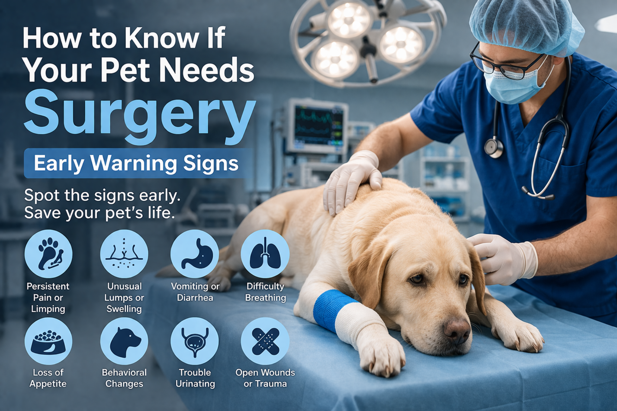
When it comes to your pet’s health, early detection can make a life-saving difference. Many pet owners delay treatment because they are unsure whether their pet’s condition requires surgery. Recognizing the warning signs early can help you take timely action and ensure your pet gets the right medical care.
At Eden Pets Care, advanced veterinary diagnostics and surgical expertise help identify and treat critical conditions effectively.
Pets often hide pain and discomfort, making it difficult to identify serious health issues. Delayed diagnosis can lead to complications, increased costs, and prolonged recovery. Early intervention not only improves surgical outcomes but also ensures a faster and safer recovery for your pet.
If your dog or cat is limping, avoiding movement, or showing signs of pain for more than a few days, it could indicate fractures, ligament injuries, or joint problems that may require surgical treatment.
Loss of appetite, drooling, or difficulty swallowing can signal oral tumors, dental disease, or throat obstructions. In many cases, surgical intervention is necessary to resolve these issues.
Any new lump or swelling should never be ignored. While some growths are harmless, others may be tumors that require surgical removal. Early diagnosis significantly improves outcomes.
Chronic vomiting or diarrhea could indicate intestinal blockages, infections, or internal damage. If symptoms persist, surgery might be needed to remove obstructions or treat underlying conditions.
Labored breathing, wheezing, or coughing can indicate respiratory issues, heart conditions, or airway obstructions that may require emergency surgery.
If your pet becomes unusually aggressive, lethargic, or withdrawn, it could be due to pain or internal illness. Behavioral changes are often early warning signs of serious conditions.
Straining, pain, or inability to urinate or pass stool may indicate bladder stones, blockages, or gastrointestinal problems that require immediate surgical attention.
Accidents, bites, or injuries that result in deep wounds often require surgical repair to prevent infection and promote proper healing.
Seek urgent veterinary care if your pet shows:
These symptoms may indicate life-threatening conditions requiring emergency surgery.
At Eden Pets Care, the surgical process typically includes:
This ensures your pet is fit for surgery and minimizes risks.
Proper aftercare is essential for recovery:
If your pet shows any unusual symptoms for more than 24–48 hours, it’s best to consult a veterinary professional. Early consultation can prevent complications and may reduce the need for major surgery.
Choosing a trusted veterinary clinic ensures:
Eden Pets Care provides comprehensive surgical care for pets, from minor procedures to complex surgeries, ensuring your pet receives the best possible treatment.
Understanding the early warning signs that your pet may need surgery can help you act quickly and protect your pet’s health. Never ignore persistent symptoms or unusual behavior. Timely medical attention can save your pet’s life and ensure a smoother recovery.
1. How do I know if my pet needs surgery?
Signs like persistent pain, swelling, vomiting, breathing difficulty, or behavioral changes may indicate the need for surgery.
2. Is surgery safe for pets?
Yes, with modern veterinary techniques and proper pre-surgical evaluation, most procedures are safe.
3. How long does pet surgery recovery take?
Recovery time varies from a few days to several weeks depending on the procedure.
4. What should I do if my pet shows emergency symptoms?
Seek immediate veterinary care as delays can be life-threatening.
5. Can all pet conditions be treated without surgery?
Not always. Some conditions like tumors, fractures, or blockages require surgical intervention.


Address : 7, Ground Floor, Dayasadan Road, off, Poonamallee High Road, opposite to Shell Petrol Bunk, Nerkundram, Chennai, Tamil Nadu 600107

